
The Fight for Equal Parenting
4/27/2026
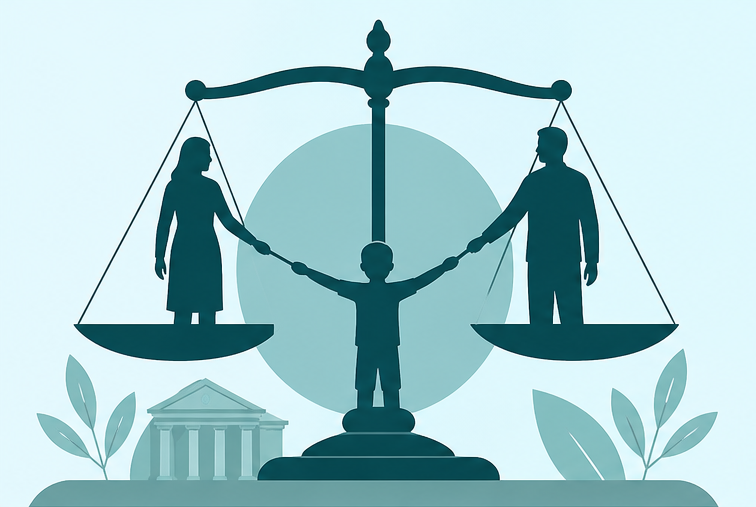

Children need both parents. Not just on weekends. Not just on holidays. Every day.
That's not an opinion — it's what decades of research tell us. And yet, family court systems around the world continue to default to arrangements that push one parent — usually the father — to the margins of their own child's life.
If you're a dad who's been through this, you already know the pain. The every-other-weekend schedule. The supervised visits. The feeling that the system sees you as a visitor in your own child's life instead of the parent you've always been.
You're not alone. And this fight is bigger than any one of us.
What the Research Actually Says
Let's talk about the science — because the science is on our side.
Professor Linda Nielsen at Wake Forest University reviewed 60 studies on shared parenting. Her conclusion? Children who spend substantial time with both parents after separation do better in nearly every measurable way — emotionally, behaviorally, academically, and in the quality of their relationships with both mom and dad.
Research from the Karolinska Institute in Stockholm found that children in shared custody arrangements experience less stress than children living primarily with one parent. Less stress. Not more — despite what opponents of equal parenting like to claim about "instability."
The evidence is overwhelming. Children thrive when they have real, meaningful time with both parents. Not token visits. Real time.
The Benefits Are Clear
When equal parenting is the standard, everyone benefits:
Children maintain strong bonds with both parents — not just the one who "won" in court
Both parents stay actively involved in day-to-day parenting decisions
Kids experience fewer loyalty conflicts — they don't have to choose sides
Financial responsibility is shared more fairly — reducing conflict over support
Children develop better coping skills — they learn that change doesn't mean loss
Fathers remain engaged — instead of slowly fading out of their children's lives
That last point matters more than most people realize. Studies consistently show that when fathers are reduced to weekend visitors, many gradually disengage — not because they stop caring, but because the system makes meaningful parenting nearly impossible.
Where the World Is Headed
Here's the good news: the world is waking up.
Sweden has led the way since the 1990s. Today, about 40% of children from separated families live in shared custody. Swedish parental leave policies — with dedicated, non-transferable time for fathers — helped create a culture where dads are expected to be hands-on from day one.
Belgium made shared parenting the legal default in 2006. When parents separate, the court first considers equal custody. A different arrangement is only ordered if there are serious reasons against it. That's how it should work.
Australia passed the Shared Parental Responsibility Act in 2006, emphasizing the importance of both parents in a child's life.
In the United States, Kentucky became the first state to establish a legal presumption of joint custody in 2018. More states are following. The momentum is building.
Iceland gives fathers six months of non-transferable parental leave. The result? 90% of Icelandic fathers take parental leave. When you build the structure, fathers show up.
Even France introduced shared residence into law in 2002, and the numbers have been climbing ever since.
The pattern is clear: wherever equal parenting is supported by law, children benefit, fathers stay involved, and families — even separated ones — function better.
What Needs to Change
Too many family court systems still operate on outdated assumptions — that mothers are the "natural" primary parent, that fathers are providers first and caregivers second, that children need one "home base" and the other parent is a supplement.
These assumptions hurt everyone. They hurt fathers who are denied meaningful time with their children. They hurt mothers who carry a disproportionate burden. And most of all, they hurt children who lose access to a parent who loves them.
What we need:
Equal parenting as the legal starting point — not something fathers have to fight for
Effective consequences when one parent blocks the other's access — because a court order means nothing without enforcement
Better training for family court judges — so decisions are based on current research, not outdated biases
Support services for shared parenting families — mediation, co-parenting programs, conflict resolution
A cultural shift — recognizing that involved fatherhood isn't optional, it's essential
This Is Personal
If you're reading this, chances are this isn't abstract for you. It's personal.
Maybe you're in the middle of a custody battle right now. Maybe you've already lost years you'll never get back. Maybe you're just trying to figure out how to stay present in your child's life when the system seems designed to push you out.
Know this: every father who stands up for equal parenting — in court, in their community, in their own family — is making it easier for the next father. And the next one. And the one after that.
The research is clear. The global trend is clear. Children need both parents, and both parents deserve the chance to be there.
The fight for equal parenting is the fight for our children's future. And it's a fight worth having.
---
#BeTheGoodDad #EqualParenting #SharedParenting #FathersRights #ChildRights #FathersMatter #ParentalRights #StopParentalAlienation #PositiveParenting #FamilyLaw
Connect
Join us to celebrate father-son connections worldwide.
contact
Grow
info@agoodfather.org
© 2026. All rights reserved.